
Welcome to The Workshop Blog
Your local hub for DIY inspiration, project know-how, and community stories from Lake Isabella True Value & Builders Mart.
Welcome to The Workshop Blog
Your local hub for DIY inspiration, project know-how, and community stories from Lake Isabella True Value & Builders Mart.
Seasonal Advice
Get timely tips to keep your home and yard in top shape — from spring planting to winter prep and everything in between.
Community Stories
We’re more than a hardware store. Here you’ll find stories about the people, projects, and events that make our Kern River Valley community special.
Searchable Archive
Looking for something specific? Browse past articles and find exactly the advice or project you need.
Defensible Space in the Kern River Valley: A Practical Home-Hardening Checklist
Nobody in the Kern River Valley needs to be told that fire is part of living here. From Bodfish to Kernville to Weldon, we have all watched smoke columns over the ridgelines and packed a go-bag at least once. What is worth repeating, every summer, is this: the work you do in the hundred feet around your house matters more than almost anything else in determining whether it survives an ember storm. Defensible space is not a landscaping style; it is the highest-return project on your property.
Here is a practical checklist, sized for real valley properties, with everything available at Lake Isabella True Value on Lake Isabella Boulevard.
Zone 0: the first five feet decide a lot
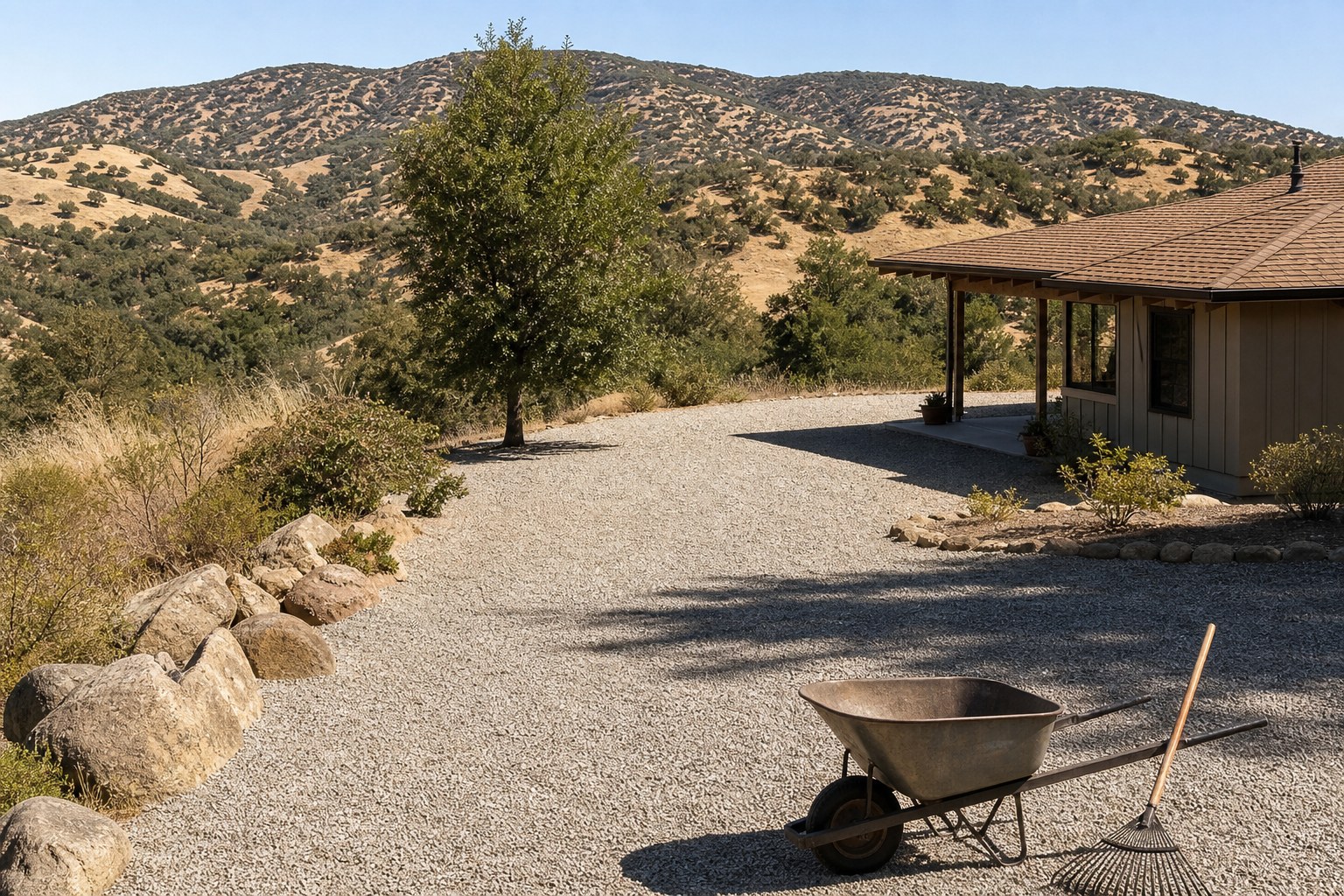
Cal Fire's guidance keeps evolving, but the science is settled on one point: the five feet immediately around your walls should have nothing that can carry flame. That means no wood mulch against the house, no dead plants under the windows, no stack of firewood on the porch, and no doormat-and-broom collection against the siding.
This weekend's version: rake the first five feet down to bare dirt, gravel, or stone. A solid steel-tine rake and a wheelbarrow are the whole toolkit. Move the firewood pile at least 30 feet from any structure; yes, it is less convenient in January, and it is worth it every July.
Zone 1: zero to 30 feet, the lean and green zone
- Cut the dry grass and keep it under four inches through the season.
- Limb up trees so the lowest branches are at least six feet off the ground; a bypass lopper handles most of it, and for bigger limbs a DeWalt 60-volt cordless chainsaw does the job without dragging a cord or mixing fuel. Keep your chain sharp; we stock Oregon chainsaw files in both common sizes.
- Break up fuel paths. A fire should not be able to walk from the fence line to the propane tank to the eaves. Space shrubs, and keep anything flammable from forming a continuous line to the house.
- Haul the slash. Green waste piles against the back fence are just future fuel. Check KRV transfer station hours and get it off the property.
Harden the house itself
Embers, not walls of flame, ignite most homes in a wildfire. They blow in from a fire miles away and find the one weak spot. The fixes are mostly small:
- Screen the vents. Attic, foundation, and eave vents need 1/8-inch metal mesh to keep embers out of the two most flammable cavities in your house. Bring your vent measurements in and we will set you up with mesh and fasteners.
- Clean the gutters and cover them. Dry leaves and pine needles in a gutter are an ember's favorite landing pad. After you clean them, a steel gutter guard keeps the fuel from re-accumulating where you cannot see it.
- Look under the deck. If the space under your deck is storing lumber, cardboard, or ten years of miscellaneous, relocate it. Ember plus stored fuel under a deck is a bad combination.
Water: your first line while you wait
Every valley property should be able to put water anywhere within reach of a hose, fast. That means hoses that are actually connected and functional, not the cracked one that has been baking behind the shed since 2019. A Flexzilla 100-foot hose covers a lot of ground on a big lot; pair it with a metal hose nozzle that throws a real stream, and put a brass Y connector on the bibb so a second hose is always ready. If you are on a well, remember that the pump dies when the power does; that is a good argument for a stock tank or a generator plan, and we are glad to talk through either at the counter.
The evacuation basics, since we live here
Defensible space protects the house; a plan protects the family. Keep the truck above a quarter tank in fire season, know both routes out of your area (178 goes both directions for a reason), sign up for Kern County emergency alerts, and keep the go-bag packed: documents, medications, chargers, N95s, and enough water. None of this is alarmism in the KRV; it is just the local version of checking your smoke detectors.
We are your neighbors in this
Lake Isabella True Value is at 6050 Lake Isabella Blvd, and fire-season prep is a conversation we have all summer long. Come in with photos of your property and your questions; we will help you figure out which weekend project buys the most protection. You can also check stock anytime at lakeisabella.shoptruevalue.com. The valley takes care of its own; start with the hundred feet around your door.

Enjoy these tips? Get more in your inbox.
Sign up for our email newsletter and never miss a project idea, seasonal special, or local story.

Connect with us
Follow us on social media for deals, project ideas, and community events.
Call us at (760) 379-5697

© Copyright 2026. Lake Isabella True Value. Lake Isabella True Value Hardware. All rights reserved.
Connect with us
Follow us on social media for deals, project ideas, and community events.
Call us at (760) 379-5697
© 2026 Lake Isabella True Value Hardware. All rights reserved.